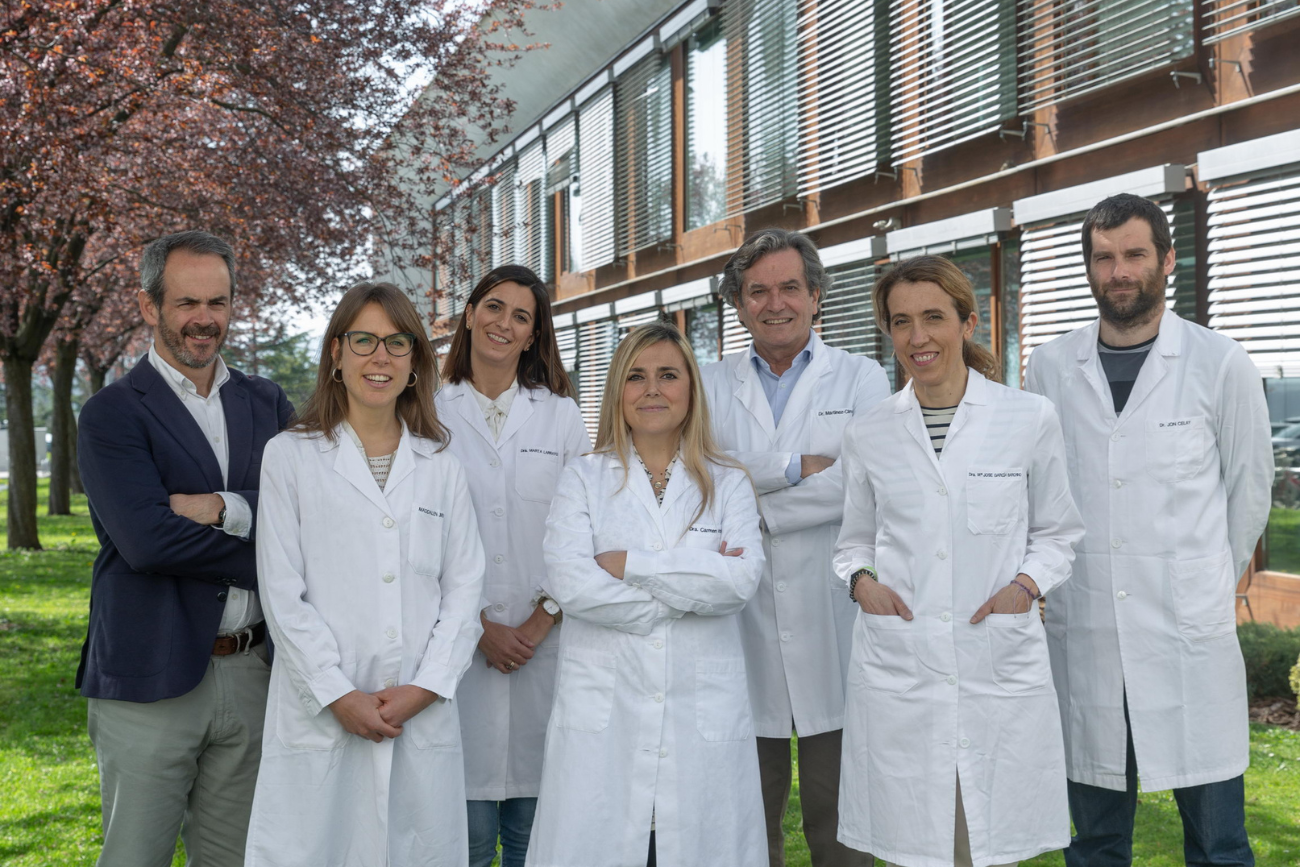
MIMO Biosciences, member of Navarra Health Cluster, celebrated its first year of activity in February — a journey already marked by key milestones, including its first capital increase at the end of 2024.
Ricardo Pérez, CEO of MIMO Biosciences, introduces the company’s work focused on preclinical-stage drug research for various types of haematological cancers, such as multiple myeloma — the second most common blood cancer and, in most cases, still incurable.
Can you tell us how the journey of MIMO Biosciences began?
MIMO Biosciences is a spin-off from Cima Universidad de Navarra that began operations on 1 February 2024, with my appointment as CEO and the incorporation of six researchers from the laboratory led by José Ángel Martínez Climent. This haematology-oncology lab at Cima focuses on the study of blood-related cancers. The team developed and refined mouse models for haematological diseases, particularly multiple myeloma and lymphoma.
These mice naturally develop the disease without any alteration or injection of tumour cells into their immune system — a common method in other models. Instead, they are born with a specific genetic lesion that predisposes them to develop the disease naturally within 6–7 months. This is exceptional in science, as these models provide more robust and reliable data than other available alternatives. The models were featured in Nature Medicine in 2023, and this publication was the catalyst for creating the company. Cima licensed the know-how and granted MIMO exclusive worldwide rights to these mouse models.
What does MIMO do, and what sets it apart from others?
Our business model is based on testing drugs in the preclinical stage for pharmaceutical companies using these unique mouse models. We sell the information derived from these studies through a fee-for-service model. We operate on a contractual basis: we define the project scope — including the types and number of models to be used, duration, drug dosage, and other specific details — and, at the end of the process, we deliver valuable insights to help pharmaceutical companies make decisions. The type of company that provides this service is known as a CRO (Contract Research Organisation).
MIMO has three key competitive advantages:
- We own our models;
- We are science-based and highly flexible when executing trials — unlike a standard CRO;
- We are embedded in a powerful ecosystem, with access to 400 researchers at Cima and clinicians from the Clínica Universidad de Navarra.
How is the company positioned within the Navarre health ecosystem?
I greatly value the support of Navarra Health Cluster. Although we haven’t yet had many opportunities to collaborate, I strongly believe we’ll benefit significantly from being part of this group. While 100% of our clients are based in the United States, you never know — networking activities are highly valuable, offering the chance to share experiences and tackle common challenges. The stakeholders in Navarre are world-class, and our region has the right conditions to aspire to high-impact technological projects.
What are MIMO’s prospects for 2025?
One of the key milestones is our growth. In January, we welcomed a new Chief Financial Officer. This February, four new team members are joining us, and we expect to add up to seven more by the end of the year. Although we don’t plan to open facilities in the United States, we are considering setting up a commercial office.
Additionally, in May, we will move into new facilities on the University of Navarra’s campus, in the science area, within the animal research zone. It will feature a brand-new animal facility of nearly 400 square metres.
Our main challenges in 2025 include consolidating our business model to become a global leader in haematological cancers. We are already leaders in multiple myeloma, and now we aim to expand into other types of myeloma and, especially, lymphoma. Finally, we intend to develop our own models with our strategic partner under “freedom to operate” conditions. This was one of the main reasons for our recent capital increase. Although the competition is fierce at a global level, we are highly competitive thanks to the high quality of our services and science-driven approach.