VidAAs is positioned as a public Living Lab focused on social innovation, connecting ecosystem actors to address complex challenges with real impact on society.
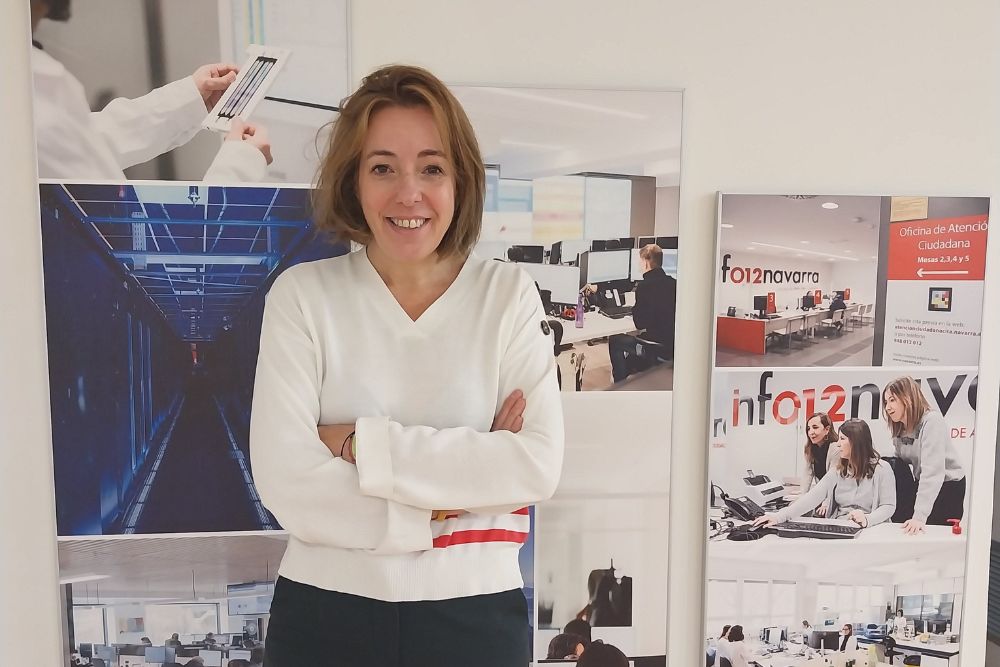
Interview with VidAAs – Idoia Urmeneta Varona, VidAAs Centre Coordinator
Could you introduce VidAAs and explain its role within Navarre’s socio-sanitary innovation ecosystem?
VidAAs is a public innovation centre promoted by the Directorate General for Planning, Coordination, Innovation and Evaluation of Public Policies of the Government of Navarre, through the public company Nasertic. Our mission is to position Navarre as a national and international reference in social innovation. At a more operational level, our mission is to improve people’s quality of life throughout their life cycle through innovation processes. VidAAs acts as a strategic node within Navarre’s innovation ecosystem, and our goal is to connect public administration with social organisations, universities, technology centres and companies, in order to turn major social challenges into applied solutions that genuinely address the situation of the most vulnerable people.
The VidAAs Centre was established in 2024 through a participatory process in which we worked with various social entities from the ecosystem — companies, start-ups, technology centres and universities — to build a social innovation space that incorporated input from all stakeholders. We have a VidAAs council made up of ecosystem representatives, to whom we are accountable and who also guide and support us throughout this process. Navarra Health Cluster has been closely involved from the very beginning, both as a member of the council and through the support it has provided us.
We have identified a number of complex social challenges that we are working on — for example, the integration of people with disabilities into the mainstream labour market; the issue of care throughout the life course and how caring responsibilities affect those closest to the people concerned; population ageing and the Silver Economy; and the changing patterns of migration, as we need to address new realities arising from the arrival of young people of African origin.
VidAAs has a Living Lab geared towards experimentation in real-world environments. How is this space conceived and organised, and what sets it apart?
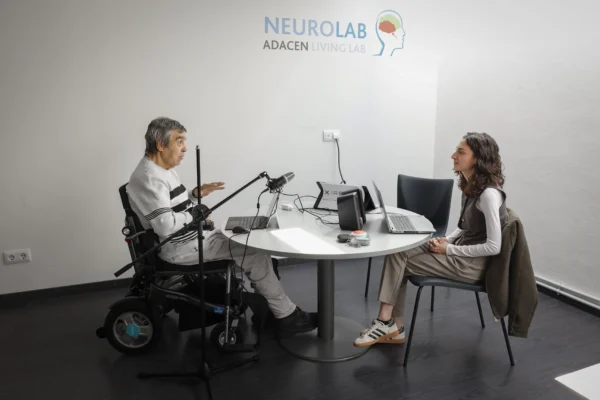
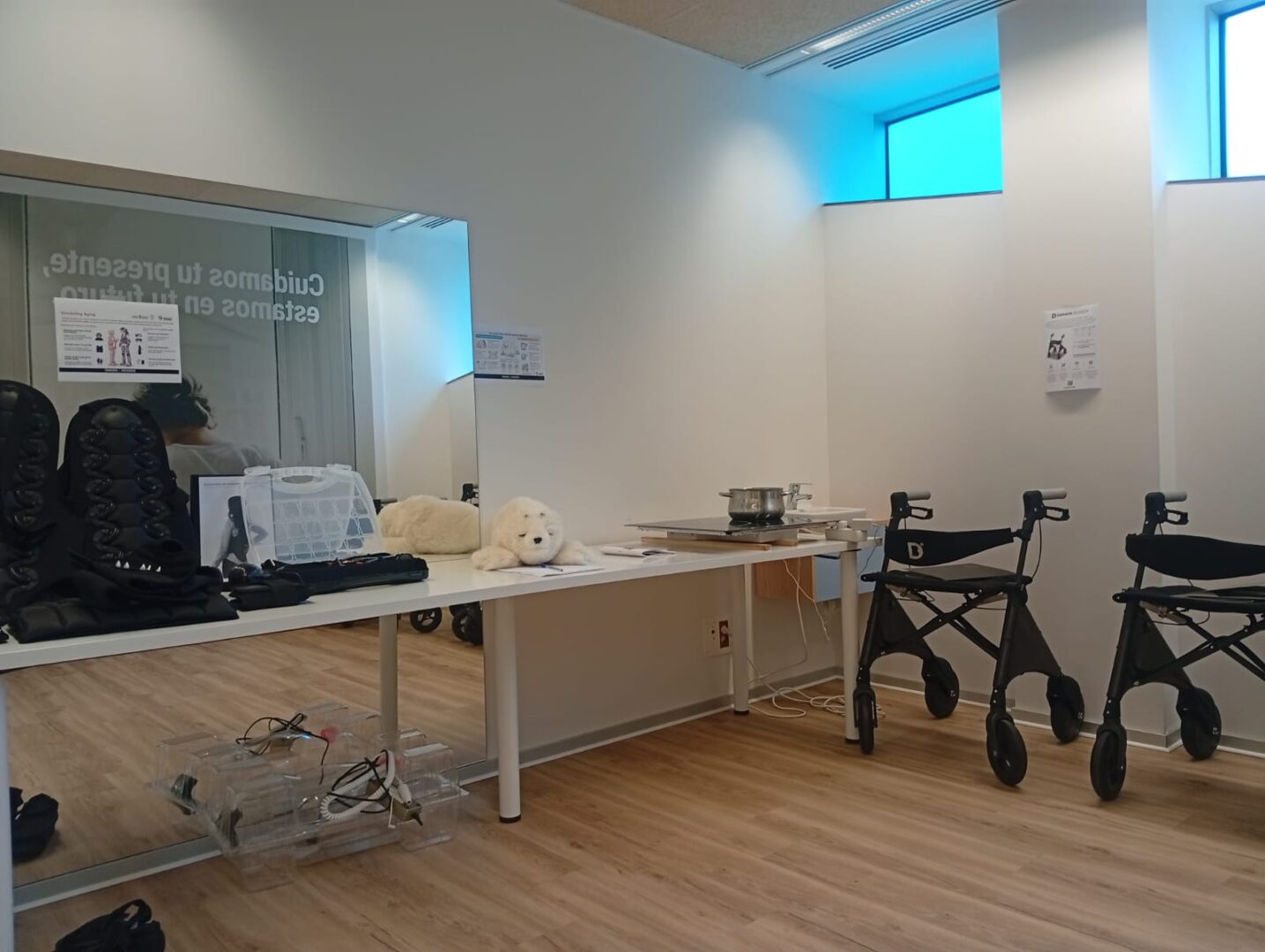
The VidAAs Living Lab is conceived as both a physical and methodological space for experimentation under real conditions of use. It is located in Sarriguren and features accessible, versatile facilities that enable collaborative working. The aim is to create and test technological, methodological and social solutions that improve people’s quality of life, incorporating criteria of accessibility, autonomy and usability. VidAAs does not focus solely on technical validation — it also integrates a social and relational dimension so that solutions interact with people’s everyday lives and with existing social and healthcare systems.
What kind of services and opportunities does your Living Lab offer to companies or organisations wishing to develop or validate innovative solutions?
We run projects that we initiate specifically from VidAAs, such as “AI Challenges”, in which we applied design thinking methodology with a group representative of society’s diversity — people with disabilities, people in the process of ageing, family members, people working in social organisations and companies — to identify everyday challenges that could be addressed with artificial intelligence. We then held a Hackathon to find solutions to these challenges, and organised a Matchathon in which Navarrese companies gave shape to those solutions through prototyping.
We also support the testing and technical validation of more technology-driven solutions, based on the principle of co-creation. For example, we are currently working on testing Darwin Biomed walkers that are not yet on the market. They use artificial intelligence to improve and facilitate mobility for people who are ageing. We identify different variables and assess how everyday use of this technology accommodates those variables, with the aim of enabling the company to incorporate modifications that improve the final product.
We also carried out testing of the digital identity wallet developed by the Government of Navarre. This application includes biometric identification, which can create a digital divide for many people and hinder their access. We conducted testing to identify complexities arising from different life circumstances.
When a company contacts us, we arrange an initial meeting in which we analyse the technology — how it has been developed to date, what stage it is at — and from there we draw up a joint work plan identifying what VidAAs can contribute to the technical validation process.
You recently obtained ENOLL certification. What does this recognition mean for VidAAs, and what are your main challenges and priorities in the short and medium term?
The certification was an intensive process that has allowed us to acquire the appropriate methodology with the person-centred approach that positions VidAAs as the first certified public Living Lab in Navarre. It opens the door to greater participation in European projects, international networks and knowledge transfer processes.
Among our challenges is consolidating the Living Lab model in Navarre — ensuring that companies, start-ups and universities make use of VidAAs in their social innovation processes. As we are a very young social innovation centre, we are working intensively to raise our profile within the Navarrese ecosystem.
In the medium term, the priority is to scale up projects with real impact. It is also very important to continue deepening our commitment to social innovation that is ethical, inclusive and, above all, socially responsible from within the public sector.