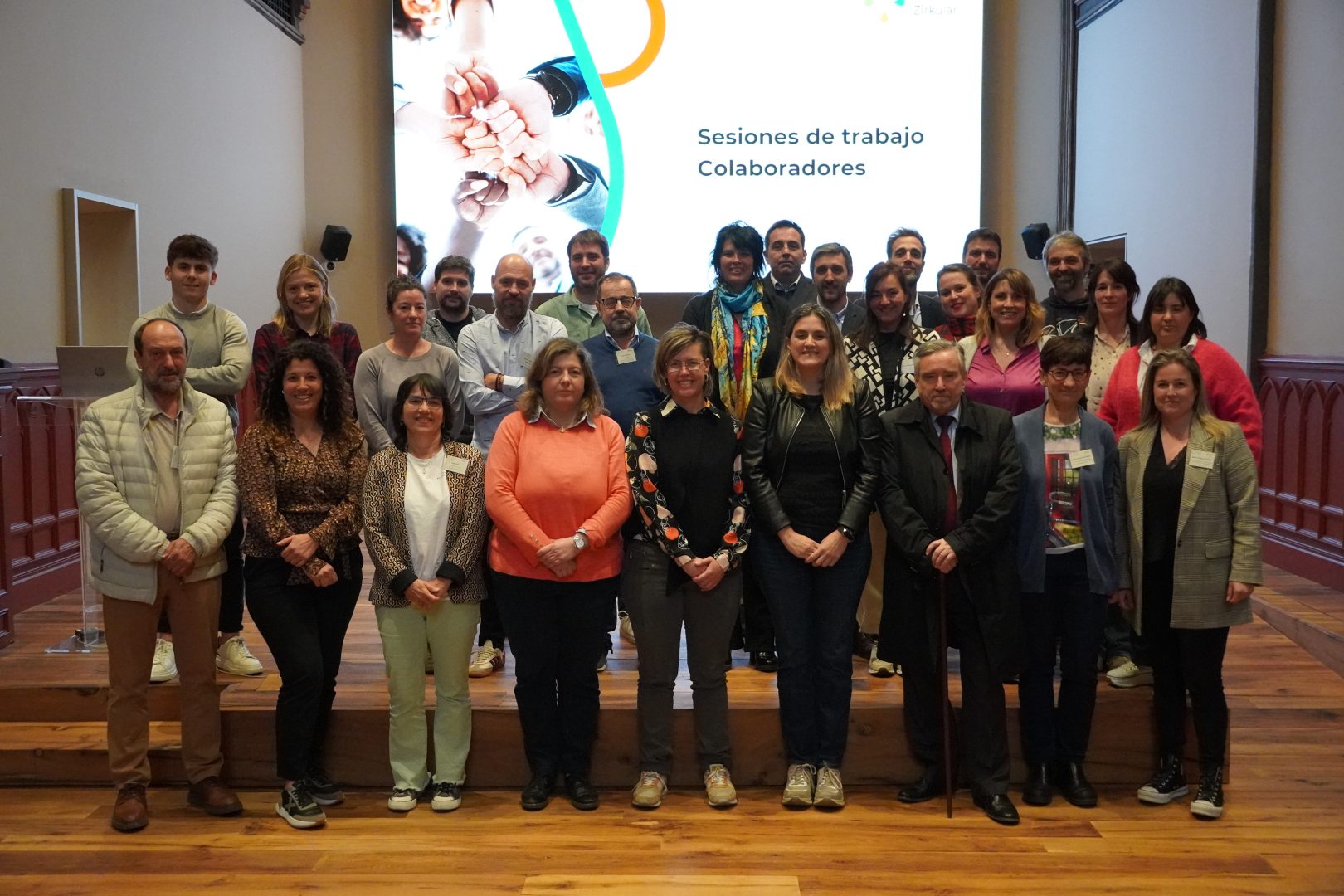
Navarra Health Cluster has participated in two days of reflection and work organized by Navarra Zirkular, a public-private initiative promoted by several departments of the Government of Navarra to promote the adoption of the circular economy in companies, of which the NHC is a collaborator since the beginning of 2023.
The objective of these days has been to reflect on the work carried out during the last two years, to gather conclusions and to contribute new approaches that will help adjust the strategy of this initiative to the new realities and needs of Navarre.
A key factor in the EU’s goal of achieving carbon neutrality by 2050, the circular economy is about delivering high-quality, functional and safe products that are efficient and affordable, last longer and are designed for high-quality reuse, repair and recycling. Thus, the Circular Economy Action Plan focuses on measures in these 4 areas:
- Making sustainable products the EU standard.
- Empowering consumers.
- Focus on the most resource-intensive sectors with high circularity potential: electronics and ICT, batteries and vehicles, packaging, plastics, textiles, construction and housing, and food.
- Ensure that less waste is produced.

The health sector is one of the sectors in which the evolution towards circularity is taking the longest time, because it is a field that affects civil society, which is particularly sensitive to aspects it considers critical (such as safety, hygiene or confidentiality), and also because of the great diversity of actors and the weight of regulation.
However, the NHC considers it necessary to support and promote actions that will enable progress in sustainability in the sector and has presented the needs identified as a priority among the entities it represents. Among the proposals, it is worth mentioning the knowledge of initiatives of relevant companies and/or similar to those of the Autonomous Community as examples of success and positive economic impact of the circular economy in the health sector, the interest in incentives, the organization of awareness, dissemination and training workshops, and also the possibility of channeling the needs of the private sector to contribute to the public sector and thus facilitate informed decisions when legislating on the subject.